What Diploma Examiners Really Notice Beyond Just Wrong Notes
Many piano students preparing for the London College of Music Examinations DipLCM diploma piano exam or the Associated Board of the Royal Schools of Music ARSM diploma piano exam focus heavily on accuracy, memory, and technical security.
However, many candidates forget one important fact:
Diploma piano exams are performance-based examinations.
The examiner is not only listening to your notes — they are also observing your professionalism, stage presentation, musical maturity, and artistic communication.
As a piano teacher specialising in DipLCM diploma piano lessons and ARSM diploma piano exam preparation in Singapore, I often discuss examiner feedback with my students after their results are released. Interestingly, several diploma examiners repeatedly commented on the SAME presentation issues. These small details may seem minor, but they can strongly affect the overall artistic impression of a diploma performance.
Here are 3 important stage presentation tips every diploma piano candidate should know.
1. Dressing Too Casually Can Make the Performance Look Unprofessional
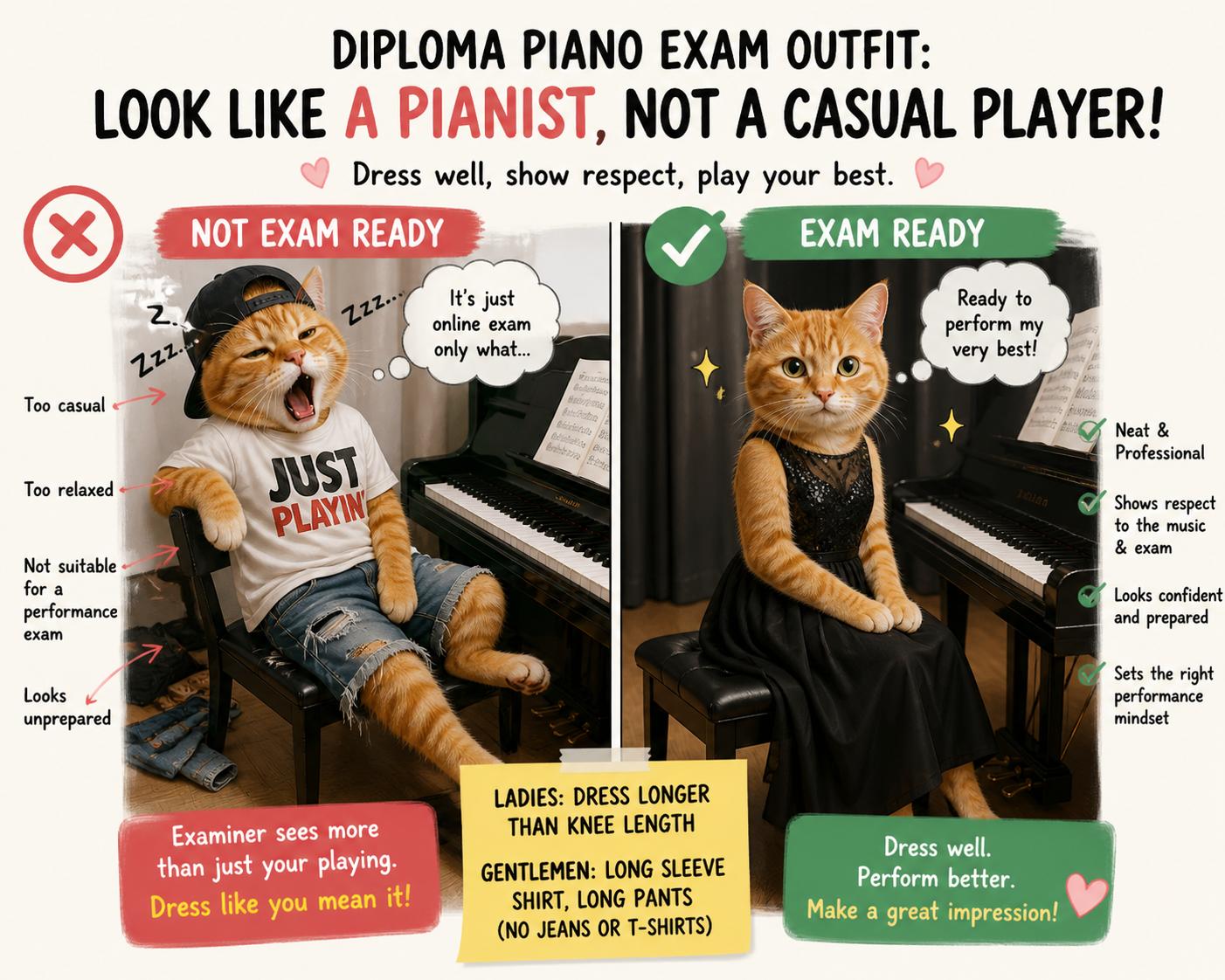
Some diploma piano candidates appeared in their exam recordings wearing very casual clothes such as:
- T-shirts
- Jeans
- Mini skirts
- Casual short-sleeve shirts
- Everyday home clothing
One diploma examiner commented that certain candidates looked “half awake” or “listless” in the recording.
Although the exam is submitted through video recording, candidates should still treat the diploma piano exam as a professional concert performance.
For performance-based qualifications such as DipLCM diploma piano exam and ARSM diploma piano exam, presentation matters because it reflects respect for:
- the music,
- the audience,
- and the examination itself.
My recommendation for diploma piano attire
For ladies:
- Elegant dresses longer than knee length
- Formal blouses with long skirts
- Avoid overly casual or revealing outfits
For gentlemen:
- Long sleeve shirts
- Formal trousers
- Smart shoes
- Avoid jeans, T-shirts, and sporty clothing
When candidates dress professionally, they immediately appear:
- more confident,
- more polished,
- and more musically convincing.
A formal appearance also psychologically helps candidates enter a “performance mindset” instead of treating the recording casually like a home practice session.
In many cases, students actually perform better when they feel professionally prepared.
2. Rushing Between Pieces Looks Unmusical
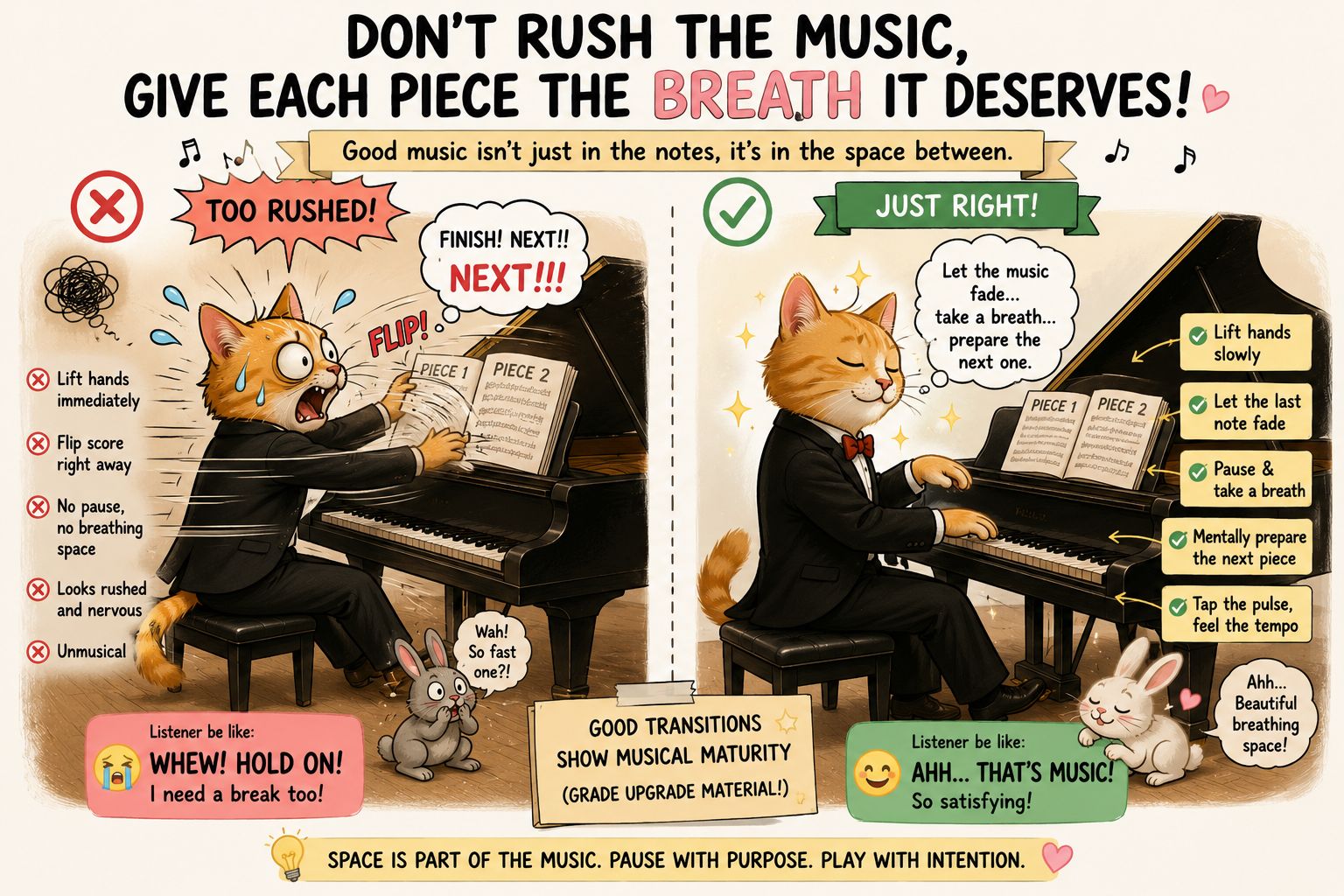
Another common examiner feedback involved candidates rushing too quickly between repertoire pieces.
One student immediately flipped to the next score the moment a piece ended, without allowing any silence or breathing space.
The examiner commented that the transition looked:
- rushed,
- nervous,
- and unmusical.
This is a very important point that many diploma piano candidates overlook.
Music does not end the second your fingers leave the keys.
After a piece finishes, the audience still needs time to absorb the atmosphere, emotion, and resonance of the final sound.
What I teach my DipLCM diploma piano students
For diploma piano recordings, I always advise students to:
- Slowly lift the hands after the final note
- Allow the sound to fully fade away
- Pause briefly before turning pages
- Take a calm breath before the next piece
- Mentally prepare the tempo and character of the upcoming work
- Tap or internalise the pulse before beginning
This creates a much more artistic and mature performance presentation.
It also helps the listener emotionally “reset” before hearing a contrasting work by another composer.
For example:
- transitioning from Chopin to Prokofiev,
- Debussy to Beethoven,
- or Bach to Liszt
requires a complete change of musical atmosphere.
Without sufficient space between pieces, the programme can feel abrupt and uncomfortable for the listener.
Professional concert pianists naturally understand this concept of pacing and emotional spacing.
Diploma examiners notice this immediately.
3. Program Notes Should Include Your Personal Story
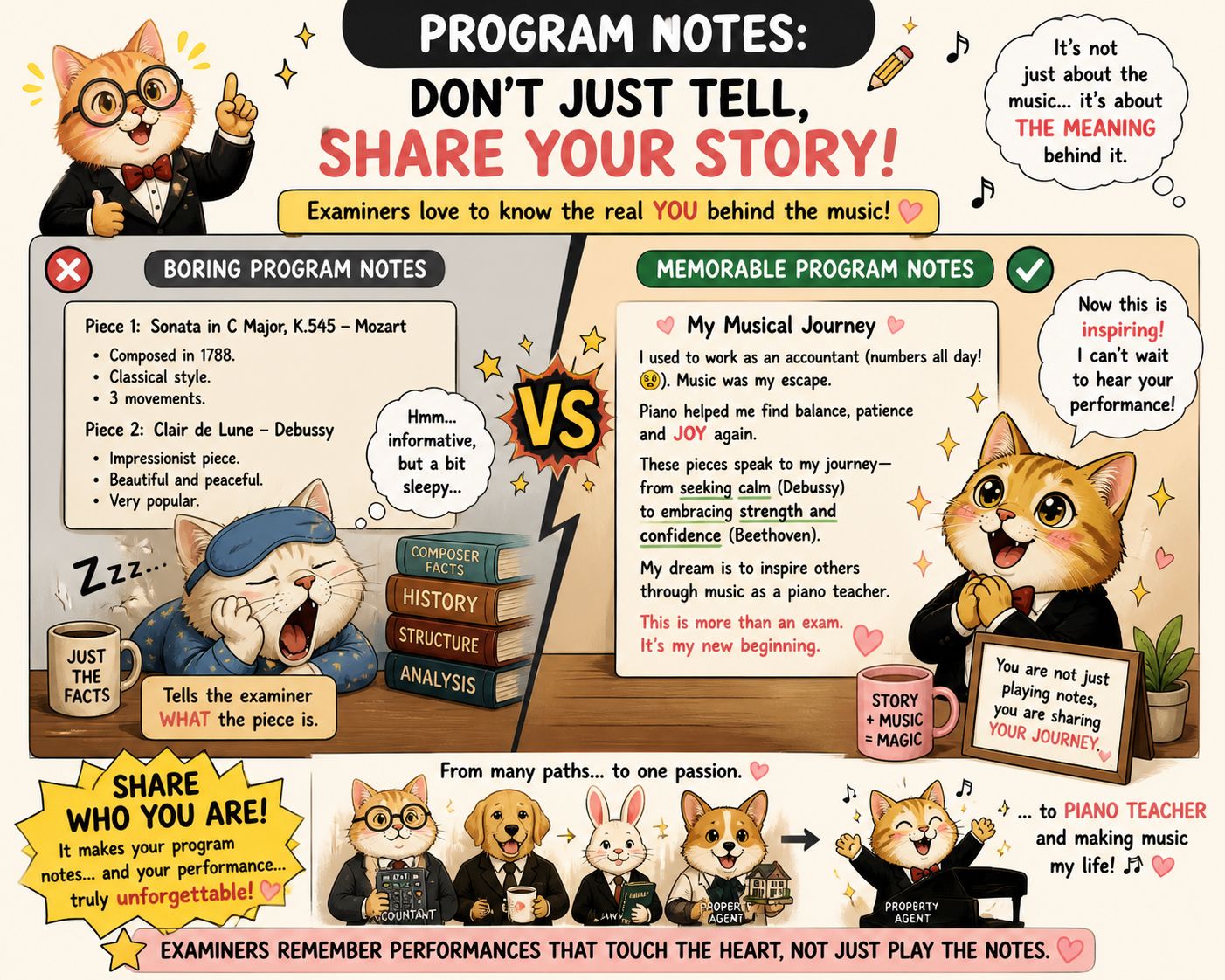
One DipLCM examiner gave very interesting feedback regarding programme notes.
Many candidates only describe:
- the historical background of the pieces,
- the structure,
- or the musical characteristics.
While these are important, examiners also appreciate learning:
- who the candidate is,
- why they selected the repertoire,
- and what music means to them personally.
This is especially inspiring for adult diploma piano candidates.
Over the years, I have taught many diploma students from completely non-musical industries, including:
- accountants,
- bankers,
- lawyers,
- engineers,
- property agents,
- and business owners.
Some students pursue the DipLCM diploma piano exam or ARSM diploma piano exam because:
- they always regretted stopping piano lessons when younger,
- they wanted a mid-life career change,
- they dreamed of becoming piano teachers,
- or they simply wanted to challenge themselves artistically.
These stories make programme notes much more meaningful and human.
Why personal stories matter in diploma piano exams
When candidates explain:
- why they chose certain repertoire,
- how music changed their life,
- or what inspired them emotionally,
the programme becomes more than just an exam submission.
It becomes an artistic journey.
This deeper connection often creates a stronger overall impression on the examiner.
Why Stage Presentation Matters in DipLCM & ARSM Diploma Piano Exams
Many students think diploma piano exams are only about:
- playing fast,
- avoiding wrong notes,
- or performing difficult repertoire.
But in reality, diploma-level examinations evaluate:
- musical maturity,
- artistic communication,
- professionalism,
- and stage presence.
These presentation skills are extremely important for students who eventually wish to become:
- piano teachers,
- performers,
- accompanists,
- or music educators.
At diploma level, examiners expect candidates to present themselves like real musicians — not just students playing notes.
DipLCM Diploma Piano Lessons & ARSM Diploma Piano Exam Preparation in Singapore
At Jenny Soh Music School, I specialise in:
- DipLCM diploma piano lessons
- ARSM diploma piano exam preparation
- Adult diploma piano coaching
- Performance recording guidance
- Programme planning strategy
- Diploma recording equipment advice
- Stage presentation coaching
Many diploma candidates can already play the notes correctly.
However, what often separates stronger diploma performances from weaker ones is:
- artistic presentation,
- programme structure,
- emotional pacing,
- and professional performance habits.
These are the finer details that diploma examiners frequently notice.
For students preparing for DipLCM diploma piano exam or ARSM diploma piano exam in Singapore, learning how to present yourself professionally can make a significant difference to the overall impression of your performance.

